Type to search. Use arrow keys to navigate results. Press enter to view all results.
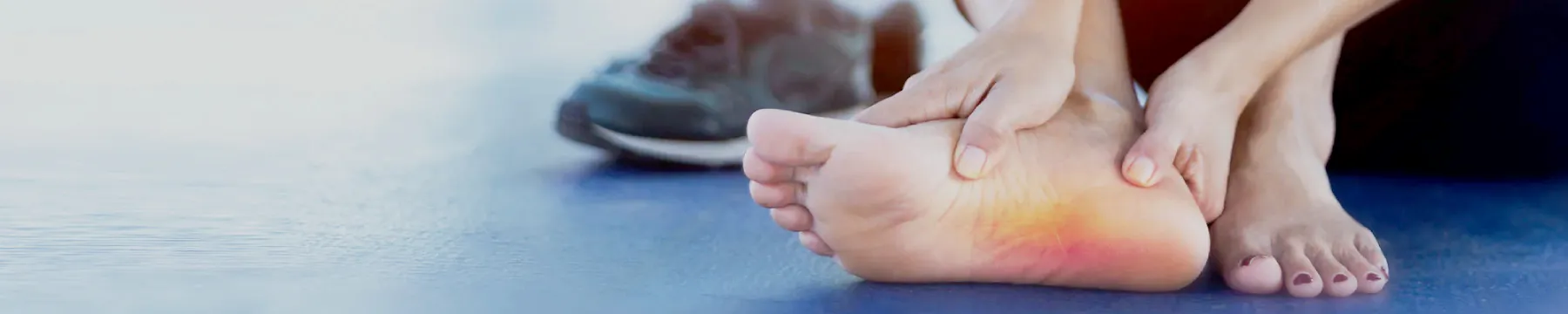
We're here to help. Foot pain isn't something you should have to live with, and for many people the problem isn't their feet, it's what they're wearing on them.
Your feet are your foundation. Every step you take relies on proper support, alignment, and cushioning. Shoes that are too tight, too loose, too flat, or lacking support put unnecessary stress on your feet and joints, and that stress travels. The wrong pair can lead to discomfort, fatigue, and long-term issues that affect your knees, hips, and back.
Tap any problem to learn more.
Plantar fasciitis is irritation of the plantar fascia, the thick band of tissue along the bottom of your foot from heel to toes. It usually feels like a sharp, stabbing pain in the heel or arch, often worst with your first steps in the morning.
Shoes that helpPain under or behind the heel can come from plantar fasciitis, a bruised heel pad or an irritated Achilles tendon. Shoes that are worn out or have little cushion or support often make it worse.
Shoes that helpBlisters form when a shoe rubs the same spot over and over, usually because it's too loose, too tight or the wrong shape for your foot. Pressure points show up where a shoe pinches, like along the sides of a wide foot or across a high instep.
Shoes that helpTired, achy feet by the end of the day usually mean your shoes aren't giving enough support or cushion for the hours you spend in them, especially on hard floors like concrete and tile.
Shoes that helpWhen your feet roll inward, roll outward or don't get enough support, the rest of your body makes up for it. Over time, that extra strain can show up in your knees, hips and lower back.
Shoes that helpWearing shoes designed for your foot type and lifestyle helps reduce that strain and keeps you moving comfortably.
Every foot is different, so there's no single "best shoe" for any of these. Here's where we usually start, and what we look for when we fit you.
Look for support that meets your arch where it is. Everyone's arch is different, so there's no one-size-fits-all answer. If you're already hurting, cushion helps right away. Over the long term, a firmer, more supportive shoe usually does more to manage the pain, but it can feel rough on a heel that's already sore. We'll help you find the right balance.
Flat feet usually do best in a shoe with real structure under the arch and a stable heel, so your foot isn't left to flatten out with every step.
If your arches roll inward when you walk or run, a stability shoe adds guidance to keep your foot on track. Good places to start: anything Brooks GTS (short for "Go-To Support"), the New Balance 1540, or any shoe in our stability and motion control running sections.
Bunions are tough because they hit differently on everyone's foot. In most cases, a softer mesh upper works better than firmer leather, since it gives where your foot needs room. A wider width can help too.
Many of our brands come in wide and extra-wide widths. Our Wide Width Shoes page lists the brands we trust most, and the Width filter on any shop page shows what's available online.
Long shifts on hard floors call for support and cushion together, plus slip resistance in kitchens and hospitals. Our top picks are the Hoka Bondi SR and the Dansko XP 2.0.
A well-fitting, properly designed shoe doesn't just feel better, it works with your body. The right pair will:
Sometimes a shoe is close but not quite there. An insole can add arch support, fill extra space or replace a worn-out footbed. We carry insoles from Aetrex, SOLE and Oboz in several styles each, plus a few from other brands.
Our insoles are in the store. Bring the shoes you'll wear them in and we'll help you find the right match.
No two feet are the same. That's why finding the right fit matters just as much as choosing the right style. Width, arch type, and how you move all play a role in what will work best for you. Taking the time to find shoes that truly fit your feet can mean less pain, more comfort, and better support right where you need it. Not sure where you land? Start with our shoe size converter.
We're shoe fitters, not doctors. If you're dealing with persistent or severe foot pain, please see a medical professional. We're always happy to work alongside your doctor's or podiatrist's recommendations.